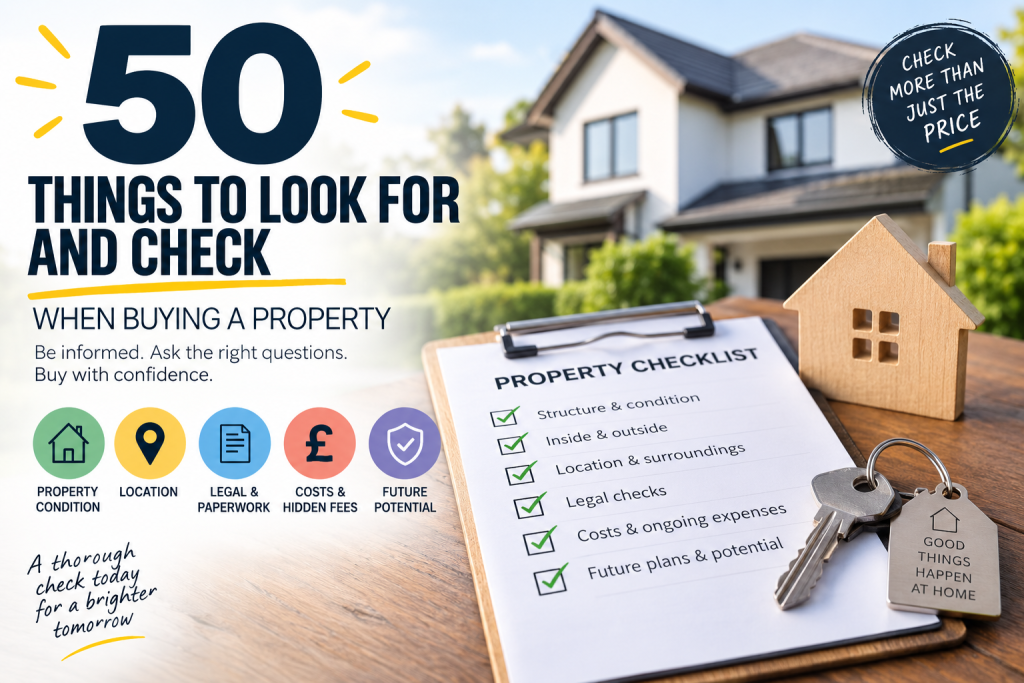
Buying a property is one of the biggest financial decisions most people will ever make. Whether you’re a first-time buyer, upgrading to a larger home, or investing in real estate, overlooking a critical detail can lead to unexpected costs, stress, and buyer’s remorse.
To help you make a confident and informed decision, here are 50 essential things to look for and check before signing on the dotted line.
1. Location Quality
A great house in a poor location can be a bad investment. Research the neighbourhood, reputation, and overall appeal.
2. Future Development Plans
Check whether new roads, housing estates, shopping centres, or industrial developments are planned nearby.
3. Crime Rates
Review local crime statistics to understand the safety of the area.
4. School Catchment Areas
Even if you don’t have children, properties near highly rated schools often retain their value better.
5. Transport Links
Consider proximity to train stations, bus routes, motorways, and commuting times.
6. Flood Risk
Investigate whether the property is in a flood-prone area.
7. Property Value Trends
Look at how property prices in the area have performed over the last five to ten years.
8. Noise Levels
Visit at different times of day to assess traffic, neighbours, aircraft, or commercial noise.
9. Local Amenities
Check access to supermarkets, healthcare facilities, restaurants, parks, and leisure centres.
10. Mobile Signal and Internet Speed
Reliable connectivity is increasingly important for work and everyday life.
11. Structural Condition
Look for cracks, uneven floors, or signs of structural movement.
12. Roof Condition
A damaged roof can be expensive to repair or replace.
13. Damp Problems
Inspect walls, ceilings, and corners for damp patches or mould.
14. Foundation Issues
Check for evidence of subsidence or shifting foundations.
15. Drainage Systems
Poor drainage can lead to recurring maintenance issues.
16. Plumbing Condition
Run taps, check water pressure, and look for leaks.
17. Electrical System
Determine when the wiring was last updated and whether it meets current standards.
18. Heating System
Find out the age and condition of boilers, radiators, or heat pumps.
19. Insulation Quality
Good insulation reduces energy bills and improves comfort.
20. Double Glazing
Inspect windows for energy efficiency and condition.
21. Energy Efficiency Rating
Review the EPC or equivalent energy report.
22. Water Damage History
Ask whether the property has ever suffered leaks or flooding.
23. Pest Problems
Look for signs of rodents, termites, or other infestations.
24. Ventilation
Poor airflow can contribute to damp and mould.
25. Ceiling Condition
Watch for sagging, stains, or cracks.
26. Wall Condition
Inspect walls carefully for repairs that may be hiding defects.
27. Flooring Condition
Check for uneven surfaces, damaged tiles, or worn carpets.
28. Doors and Windows
Ensure they open, close, and lock properly.
29. Garden Maintenance
Evaluate the effort and cost required to maintain outdoor spaces.
30. Boundary Lines
Confirm exactly what land is included in the sale.
31. Parking Availability
Check the number of parking spaces and any restrictions.
32. Storage Space
Consider lofts, garages, cupboards, and outbuildings.
33. Natural Light
Visit during daylight hours to assess brightness.
34. Room Layout
Think about how the property works for your lifestyle.
35. Future Expansion Potential
Can you extend, renovate, or convert space later?
36. Accessibility
Consider stairs, entrances, and long-term suitability.
37. Privacy
Evaluate overlooking neighbours and visibility from the street.
38. Outdoor Space
Assess the size, usability, and condition of gardens or patios.
39. Neighbouring Properties
Well-maintained neighbouring homes often indicate a desirable area.
40. Orientation
South-facing gardens and living spaces are often highly desirable.
41. Legal Ownership Status
Ensure ownership records are clear and accurate.
42. Planning Permissions
Check whether previous alterations were properly approved.
43. Building Regulations Compliance
Confirm major works meet local building standards.
44. Service Charges
For flats and managed properties, understand all ongoing fees.
45. Ground Rent
Review any ground rent obligations and future increases.
46. Property Survey Results
Always consider a professional survey before purchasing.
47. Insurance Costs
Get insurance quotes before committing.
48. Council Tax or Local Taxes
Understand the ongoing tax burden.
49. Seller’s Reason for Moving
This can reveal valuable insights about the property or area.
50. Total Cost of Ownership
Look beyond the purchase price. Consider maintenance, utilities, taxes, insurance, and future repairs.
Final Thoughts
A property purchase should never be rushed. While shiny kitchens and stylish décor can be attractive, the smartest buyers look beyond appearances and focus on the factors that affect safety, comfort, future value, and ongoing costs.
Use this 50-point checklist as your guide during viewings, surveys, and negotiations. The more thorough you are before buying, the less likely you are to face expensive surprises after moving in.
Remember: a property can be renovated, extended, and modernised, but location, structural integrity, and legal issues are much harder to change. Choose wisely, and your property could become one of the best investments you’ll ever make.