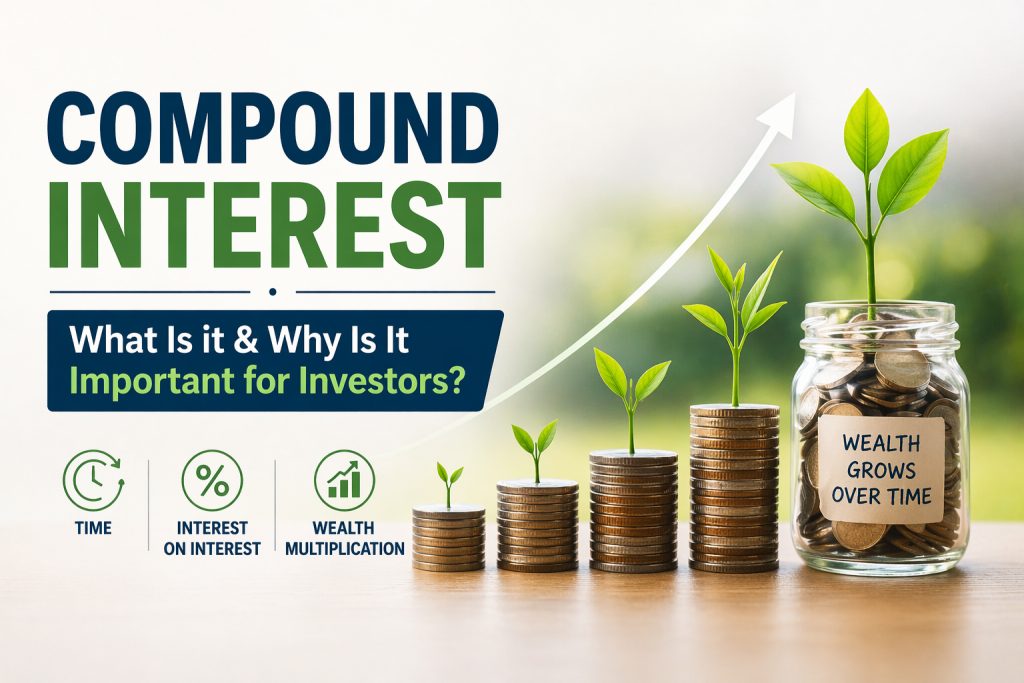
Compound Interest: What Is It & Why Is It So Important for Investors
Compound interest is often described as the cornerstone of successful long-term investing—and for good reason. It’s a simple concept with extraordinary power, capable of turning modest, consistent investments into substantial wealth over time. Whether you’re new to investing or looking to refine your financial strategy, understanding compound interest is essential.
This blog post breaks down what compound interest is, how it works, and why it plays such a critical role in building wealth for investors.
What Is Compound Interest?
Compound interest is the process by which your money earns interest on both the original amount you invest (the principal) and the interest that has already been added to it. In plain terms, it means earning “interest on interest.”
This is different from simple interest, where interest is calculated only on the original principal and does not build on previously earned interest.
Over time, compound interest creates a snowball effect. As your balance grows, the amount of interest earned in each period becomes larger, accelerating the growth of your investment.
How Compound Interest Works
The power of compound interest comes from three main factors:
- Time
The longer your money remains invested, the more pronounced the compounding effect becomes. Early gains may seem small, but growth accelerates significantly over long periods. - Rate of Return
Higher rates of return lead to faster compounding. Even a small increase in annual return can make a dramatic difference over decades. - Compounding Frequency
Interest can be compounded annually, semi-annually, quarterly, monthly, or even daily. More frequent compounding results in slightly higher returns over time.
For example, money invested at the same interest rate will grow faster if interest is compounded monthly rather than annually, assuming all other factors remain equal.
Why Compound Interest Is So Important for Investors
1. It Drives Exponential Growth
Unlike linear growth from simple interest, compound interest grows exponentially over time. In the early years, progress may feel slow, but as time passes, growth accelerates dramatically.
This is why long-term investors often experience the most significant wealth gains in the later stages of their investment journey.
2. Time Becomes Your Greatest Advantage
Compound interest strongly favors those who start investing early. Even small contributions made early in life can outperform much larger investments made later, simply because they have more time to compound.
Starting early allows time—not effort—to do most of the work. This makes patience one of the most valuable traits an investor can have.
3. It Encourages Long-Term Investing
Compounding rewards consistency and staying invested. Investors who resist the temptation to constantly withdraw profits or exit the market tend to benefit more from compound growth.
This naturally promotes a long-term mindset, which helps reduce emotional, short-term decision-making that can harm returns.
4. Reinvesting Gains Multiplies Results
When interest, dividends, or capital gains are reinvested rather than withdrawn, compounding truly takes hold. Reinvestment increases the base on which future returns are calculated, amplifying results over time.
This is why many investors focus on reinvestment strategies, especially in growth-oriented portfolios.
5. It Helps Combat Inflation
Inflation erodes purchasing power over time. Compound interest helps offset this by enabling investments to grow at a pace that can outstrip rising costs.
Without compounding, it becomes far more difficult for savings to maintain real value over long periods.
The Rule of 72: A Simple Investor Shortcut
A popular way to understand compound interest is the Rule of 72. This rule estimates how long it will take for an investment to double in value.
You simply divide 72 by your expected annual return percentage.
For example, at a 6% return, an investment would take approximately 12 years to double.
While it’s only an estimate, it highlights how powerful compounding can be over time.
Common Mistakes That Limit Compound Growth
Even though compound interest is powerful, certain behaviors can reduce its impact:
- Starting too late
- Frequently withdrawing earnings
- Chasing short-term market movements
- Ignoring fees and taxes that reduce reinvested returns
Avoiding these mistakes allows compounding to work as intended.
Final Thoughts
Compound interest is not just a financial concept—it’s a long-term wealth-building strategy. Its true power lies in time, consistency, and reinvestment. The earlier you start and the longer you stay invested, the greater its effect becomes.
For investors, compound interest transforms patience into profit and discipline into growth. Understanding and harnessing it can make the difference between simply saving money and building lasting financial security.