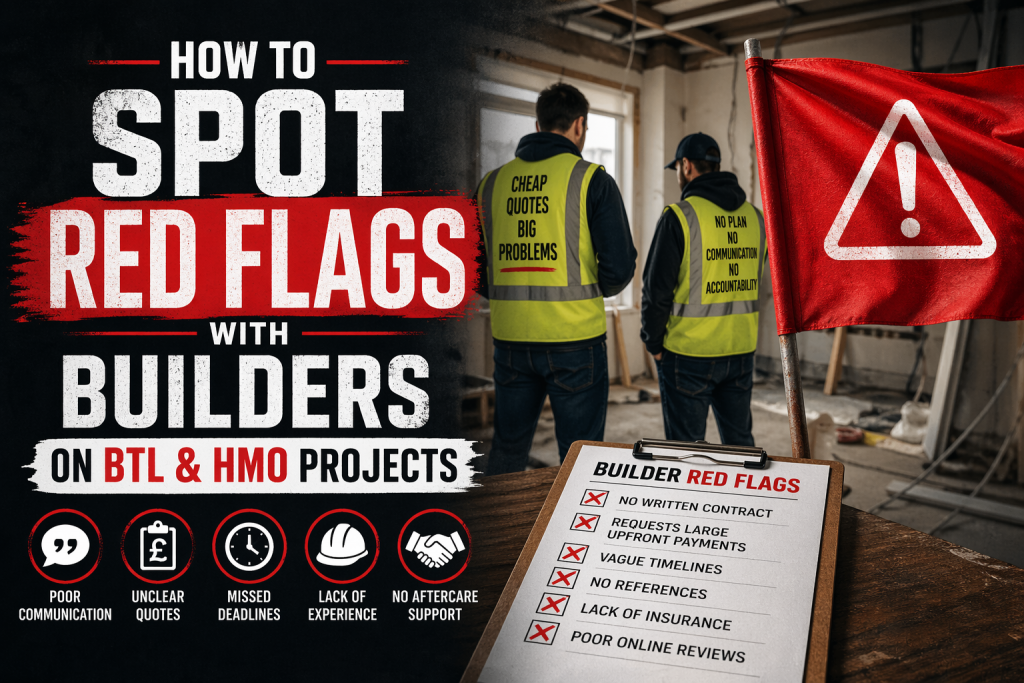
For buy‑to‑let (BTL) and HMO investors, the success of a refurbishment or conversion project often comes down to one thing: the builder. The wrong contractor can quickly turn a profitable investment into a stressful, over‑budget nightmare. Missed deadlines, poor workmanship and escalating costs are all too common when early warning signs are ignored.
In this blog post, we’ll break down the key red flags to watch out for when working with builders on BTL and HMO projects, and share practical steps you can take to ensure you’re dealing with competent, reliable tradespeople. We’ll also explain why having a signed JCT contract in place is one of the most effective ways to protect your project timeline and budget.
Why Choosing the Right Builder Matters More for BTL and HMOs
BTL and HMO projects are not the same as standard residential refurbishments. They often involve tighter margins, regulatory compliance, licensing requirements, and in the case of HMOs, higher standards around fire safety, sound insulation and room sizes.
A builder who lacks experience in investment property work may underestimate costs, misunderstand requirements, or fail inspections, all of which can delay rental income and reduce returns. This is why knowing how to spot red flags early is essential.
Common Red Flags When Dealing With Builders
1. Vague or Overly Low Quotes
One of the biggest warning signs is a quote that is significantly cheaper than others, especially if it lacks detail. While it may be tempting to save money upfront, vague quotes often lead to disputes later, with builders charging extra for items they claim were “not included”.
A competent builder should provide a clear, itemised quotation outlining labour, materials, fixtures and any assumptions made. If a builder cannot clearly explain what is and isn’t included, that should raise concerns.
2. Reluctance to Provide References or Examples
Reputable builders are usually happy to provide references from previous BTL or HMO clients, or to show examples of completed projects. If a builder avoids this, makes excuses, or only provides very old references, it may indicate a lack of relevant experience or dissatisfied past clients.
When speaking to references, ask specific questions about timelines, communication, budget control and how issues were handled.
3. Poor Communication From the Outset
How a builder communicates during the quote and planning stage is often a reflection of how they will behave once the project is underway. Slow responses, missed appointments, or unclear answers early on are major red flags.
For BTL and HMO projects, you need a builder who is organised, proactive and comfortable working to defined milestones.
4. No Understanding of HMO or Compliance Requirements
If you’re planning an HMO, be cautious of builders who are unfamiliar with local authority requirements, fire regulations, or licensing standards. A lack of knowledge here can result in failed inspections, expensive remedial work, and long void periods.
A competent builder should be able to discuss fire doors, emergency lighting, soundproofing, smoke detection and minimum room requirements with confidence.
How to Ensure You’re Working With Competent and Reliable Tradespeople
Do Proper Due Diligence
Before appointing a builder, carry out thorough checks. Verify their company details, insurance cover, and trading history. Look for a track record of delivering similar BTL or HMO projects rather than general domestic work.
Where possible, visit one of their completed projects or speak directly with previous clients.
Use Detailed Specifications and Drawings
Clear specifications reduce misunderstandings and protect both parties. Providing a detailed scope of works, supported by drawings and schedules, helps ensure accurate pricing and minimises variation claims later.
For investment projects, this level of clarity is essential to keep costs under control and avoid delays.
Insist on a Signed JCT Contract
One of the most overlooked but powerful safeguards in a BTL or HMO project is a formal building contract. A signed JCT contract sets out clear obligations for both you and the builder, including:
- Defined scope of works
- Start and completion dates
- Payment schedules
- Procedures for variations
- Mechanisms for dealing with delays and disputes
Using a JCT contract helps ensure your project runs on time and to budget, as it removes ambiguity and provides a structured framework for managing issues. Builders who resist working under contract should be treated with caution, as this can be a major red flag.
Stage Payments and Retentions
Avoid paying large sums upfront. Agree staged payments linked to completed milestones, with retention held back until final snagging is resolved. Reliable builders understand and accept this approach, while less professional operators often push for excessive advance payments.
Final Thoughts: Protecting Your Investment
BTL and HMO projects can be highly rewarding, but only when managed properly. Spotting red flags early, carrying out due diligence, and putting robust agreements in place can make the difference between a smooth, profitable build and a costly disaster. We have learnt this the hard way!!
By working with competent, experienced builders and using a signed JCT contract to set clear expectations, you significantly reduce risk and increase the likelihood that your project completes on time, on budget, and ready to generate income.