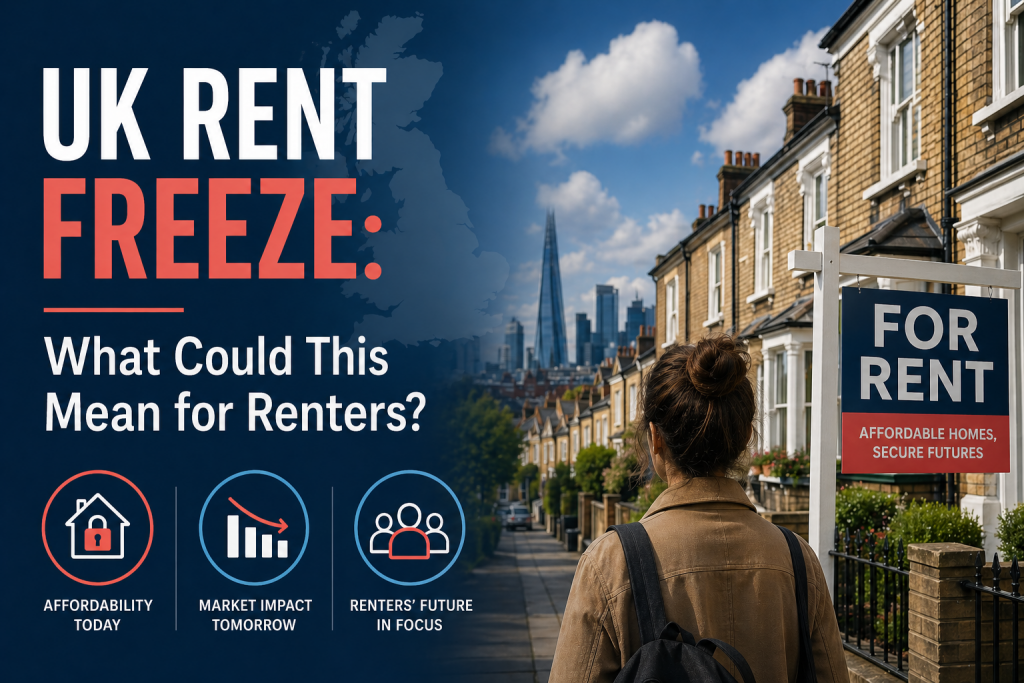
With rents across the UK continuing to rise faster than wages, the idea of a rent freeze has returned to the centre of the housing debate. A proposed policy would temporarily cap or freeze rents, aiming to give tenants immediate financial relief during a prolonged cost‑of‑living crisis. While the short‑term appeal is obvious, the long‑term effects for renters are more complex.
This blog post explores how a UK rent freeze could affect tenants now and in the future, both positively and negatively.
Why a Rent Freeze Appeals to Renters
For millions of private renters, housing costs consume a growing share of monthly income. In many areas, particularly in England’s towns and cities, annual rent increases have outpaced inflation and pay growth. A rent freeze promises:
- Immediate stability in monthly housing costs
- Greater predictability for household budgeting
- Reduced risk of sudden displacement caused by sharp rent hikes
In the short term, this type of policy could help renters cope with rising energy bills, food costs, and other essentials.
Short‑Term Benefits of a Rent Freeze
A well‑designed rent freeze could offer genuine short‑term relief for tenants, especially those on low and middle incomes.
Key potential benefits include:
- Protection against sudden rent increases, particularly at tenancy renewal
- Improved housing security, reducing forced moves and evictions linked to affordability
- More disposable income, which could support local economies
For renters struggling month to month, these effects could be significant and immediate.
Possible Long‑Term Risks for Renters
While rent freezes are popular with tenants initially, housing economists often warn about unintended long‑term consequences.
Some potential risks include:
- Reduced rental supply
Landlords may decide to sell properties or exit the sector if rental income is capped while costs continue to rise. - Decline in property maintenance
If rents are frozen without parallel support or incentives, some landlords may cut back on repairs and upgrades. - Harder access for new renters
When rents are capped, competition for available homes can intensify, making it harder for first‑time renters, young people, or those on benefits to secure a property.
These effects could gradually reduce choice and quality in the private rental market.
Impact on Future Rent Levels
Another concern is what happens after a rent freeze ends. In some markets, rent caps have led to sharp increases once restrictions are lifted, as landlords attempt to recover lost income. For renters, this could mean:
- Sudden “catch‑up” rent rises
- Less long‑term stability than anticipated
- Increased pressure to move when controls expire
Without a clear transition plan, a freeze could simply delay—rather than prevent—affordability issues.
What Renters Might Expect if a Freeze Is Introduced
If a UK rent freeze becomes policy, renters should expect it to work alongside other measures rather than in isolation. Long‑term benefits for tenants are more likely if rent controls are combined with:
- Increased housebuilding and social housing supply
- Clear standards for property condition and enforcement
- Certainty around how long a freeze will last and how it will end
A balanced approach could reduce negative side effects while preserving affordability.
Final Thoughts: Relief Now, Reform Longer Term
A rent freeze could provide valuable breathing space for renters facing unprecedented financial pressure. However, on its own, it is unlikely to solve the UK’s underlying housing shortage. For renters to benefit in the long run, any rent‑freeze policy must be part of a wider strategy focused on increasing supply, improving standards, and strengthening tenant protections.
For tenants, the key question is not only whether rents are frozen today—but whether renting remains affordable, fair, and secure tomorrow.