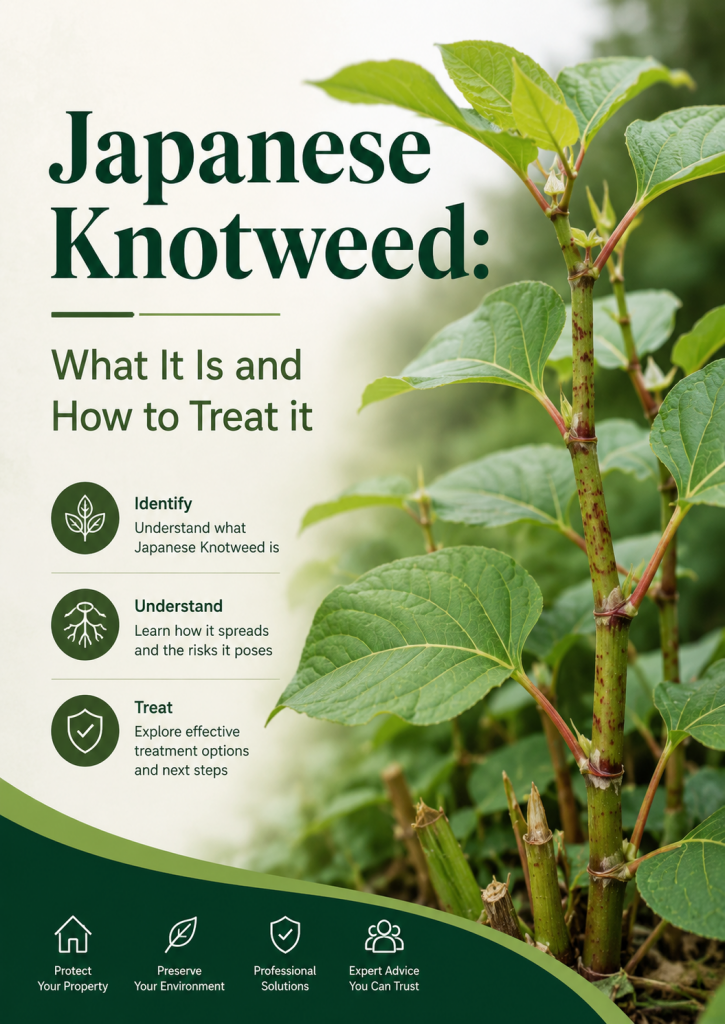
Japanese knotweed is one of the most persistent and invasive plants found in the UK and many other parts of the world. Known for its rapid growth and resilience, it can cause serious problems for homeowners, property developers, and the environment. In this blog post, we’ll explain what Japanese knotweed is, why it’s an issue, and the most effective ways to treat and control it.
What Is Japanese Knotweed?
Japanese knotweed (Fallopia japonica) is a fast-growing perennial plant originally introduced from East Asia in the 19th century. It was prized as an ornamental garden plant but quickly spread beyond control.
Key Characteristics
- Tall, bamboo-like stems that can grow up to 3 metres high
- Heart- or shovel-shaped green leaves
- Small creamy-white flowers that appear late summer
- Extensive underground root system (rhizomes) that can spread several metres
This aggressive root system is the main reason Japanese knotweed is so difficult to eliminate.
Why Is Japanese Knotweed a Problem?
Japanese knotweed is not just a nuisance plant—it can have serious consequences, especially for property owners.
Structural Damage
Its powerful rhizomes can penetrate:
- Concrete
- Tarmac
- Walls and building foundations
While it doesn’t “break through” solid structures on its own, it exploits existing weaknesses, making damage worse over time.
Property Value Impact
In the UK, the presence of Japanese knotweed can:
- Reduce property value
- Make it difficult to secure a mortgage
- Delay or prevent property sales
Rapid Spread
Japanese knotweed spreads quickly through tiny fragments of its root system. Even a small piece can grow into a new plant, making accidental spread a major issue.
How Does Japanese Knotweed Grow?
Understanding its growth pattern helps with effective treatment.
- Spring: Shoots emerge rapidly from the ground
- Summer: Full growth with dense foliage and flowers
- Autumn: Leaves die back, but rhizomes remain active underground
- Winter: Above-ground growth disappears, but roots survive
Because the plant survives underground, it can return year after year if not treated properly.
How to Treat Japanese Knotweed
Treating Japanese knotweed requires persistence and often professional help. There is no instant solution, but several proven methods can control and eliminate it over time.
1. Herbicide Treatment
This is the most common and cost-effective method.
- Use glyphosate-based herbicides
- Apply during late summer or early autumn when the plant transports nutrients to its roots
- Multiple treatments are usually required over several years
Professional herbicide programmes often provide the best long-term results.
2. Excavation and Removal
This method involves physically digging out the plant and its root system.
- Entire rhizome system must be removed
- Contaminated soil must be disposed of properly (it is classified as controlled waste in the UK)
- Often requires specialist contractors
This is a quicker solution but typically more expensive.
3. Root Barrier Systems
Used mainly for construction or landscaping projects.
- A physical barrier is installed underground to prevent the spread of rhizomes
- Often combined with herbicide treatment
This doesn’t eliminate the plant completely but controls its expansion.
4. Biological and Alternative Methods
While still developing, some alternative approaches include:
- Grazing animals (like goats) to suppress growth
- Biological control insects (restricted and regulated)
These methods are less common and usually supplementary rather than standalone solutions.
Legal Considerations in the UK
Japanese knotweed is covered by legislation:
- It is illegal to cause it to spread in the wild
- You must declare its presence when selling property
- Improper disposal can lead to fines
Always ensure treatment and waste disposal follow legal guidelines.
Preventing Japanese Knotweed Spread
Prevention is critical to avoid costly remediation:
- Never compost or dump knotweed waste
- Avoid moving contaminated soil
- Monitor your property regularly for early signs
- Seek professional advice if you suspect growth
Final Thoughts
Japanese knotweed is a highly invasive plant that can cause significant damage and financial issues if left untreated. Early identification and consistent treatment are key to controlling it effectively. Whether you choose herbicide treatment, excavation, or professional removal, addressing the problem promptly will save time and cost in the long run.